

Motor Trend Compares the RAV4 Woodland, Subaru Forester Wilderness, and Honda CR-V TrailSport
A few decades ago, SUVs promised go-anywhere outdoor adventure, and the great consumer shift from sedans, coupes, station wagons, and minivans to SUVs began. But not everyone really wanted to spend their weekends crawling on technical trails, and manufacturers quickly realized that what most of them wanted was a vehicle that carried things, offered some additional traction on wet or snowy roads, had a higher ride height, and wasn’t a station wagon. This resulted in the car-based crossover, the first of which was none other than the RAV4 in 1994.
But now that crossovers have become the default family car, manufacturers are returning to the outdoor-adventure promise by offering off-road-focused variants, with varying levels of commitment. In January, Motor Trend looked at three such crossovers, and Sharp Automotive highlights what they found.
Motor Trend gathered three prominent compact crossovers with overt off-road leanings, starting with the RAV4 Woodland, now in its second generation and more committed than the first. The newest of this genre is the Honda CR-V Hybrid TrailSport. The TrailSport name has been applied to two crossovers and one pickup on its midsize platform, and this is the first time it has been applied to the compact size model. The Wilderness name also spans three Subaru crossover models, all with the promise of significant off-road ability, and for this test, they selected the Forester.
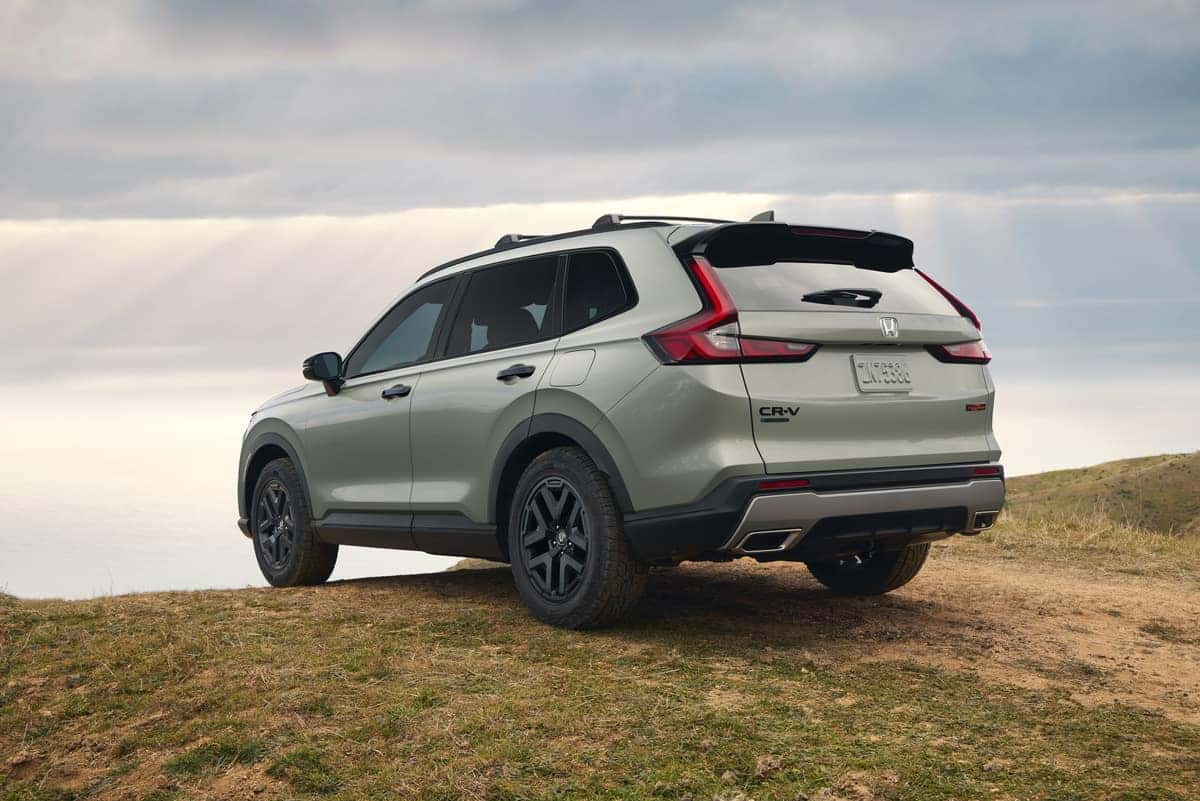
The CR-V is both the newest and the least committed of the three. It sports mild all-terrain tires and some adjustments to the AWD logic, and a useful Hill-Descent Control, but the rest is primarily aesthetic. Ground clearance is unchanged; there is also no spare tire, and towing maxes out at 1000 pounds. Motor Trend commented that it was much like the first RAV4 Woodland in that way. As such, the CR-V was fine for typical on-road crossover duty but didn’t display any real significant additional off-road capability.
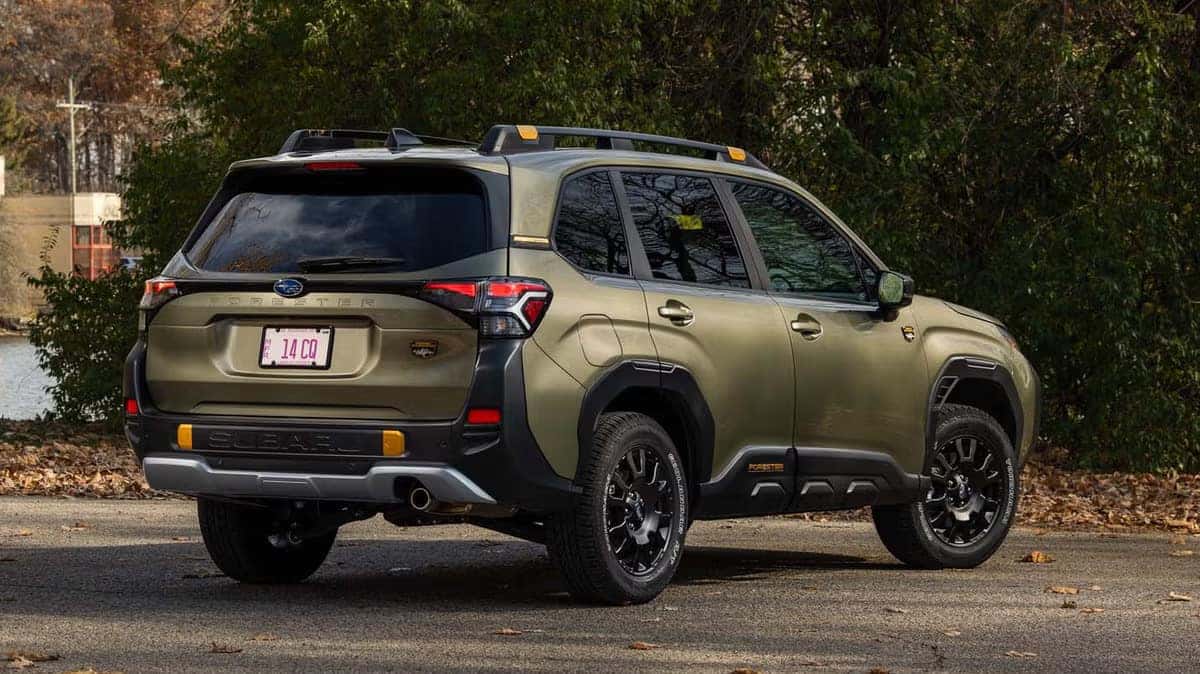
By contrast, the Forester Wilderness delivers the most off-road capability of the three. The model’s already generous ground clearance is increased to an impressive 9.3 inches, and front and rear bumpers have been reshaped to improve approach and departure angles. The X-MODE driving mode selector includes effective Snow/Dirt and Deep Snow/Mud selections that adjust throttle response and the logic of both the AWD and transmission (a CRT). It also features improved engine cooling, all-terrain tires, a full-size spare tire, and a towing capacity of 3,500 pounds, matching the RAV4 Woodland.
The Forester was faulted for being the least enjoyable to drive to and from the off-road trail, and thus in everyday use. In Motor Trend’s words, “It’s far and away the slowest, lumbering to 60 mph two seconds slower than the others in an old-timey-sounding 9.4 seconds.” The steering was also criticized, and the ride and handling were considered the worst of the group.
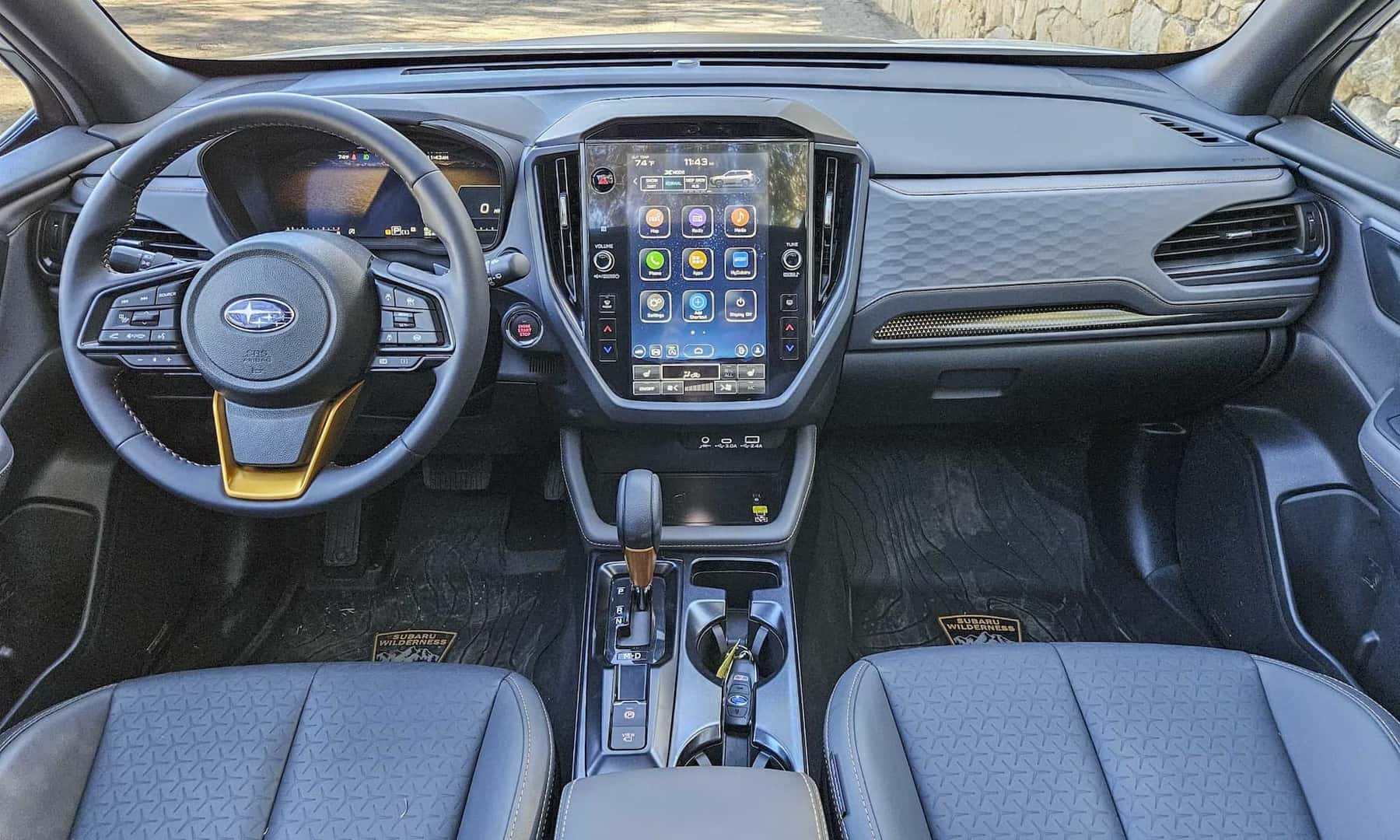
The Forester also still has Subaru’s old infotainment system, which has long been criticized for laggy response times, outdated graphics, and failing to fully control the climate controls. It also had the least cargo room. Of course, with the other two being hybrids, it also had the worst fuel mileage, with a combined figure of 26, compared to 25 for the Honda and 39 for the RAV4. It was the best off-road, but its on-road deficits raise the question of whether one shouldn’t just get a true off-road SUV at this point.
The RAV4 lands in the Goldilocks zone, with just the right balance of on- and off-road ability, and Motor Trend declared it the winner of this comparison. Motor Trend describes the Woodland upgrades as follows: “For 2026, its suspension is hiked up 0.4 inch and retuned, tires are widened, drive-mode software is also retuned, plus there’s hill-descent control and a 360-degree camera, each with its own hard button.” The model also includes a 110-volt outlet for conventional electric devices, which is useful for camping.
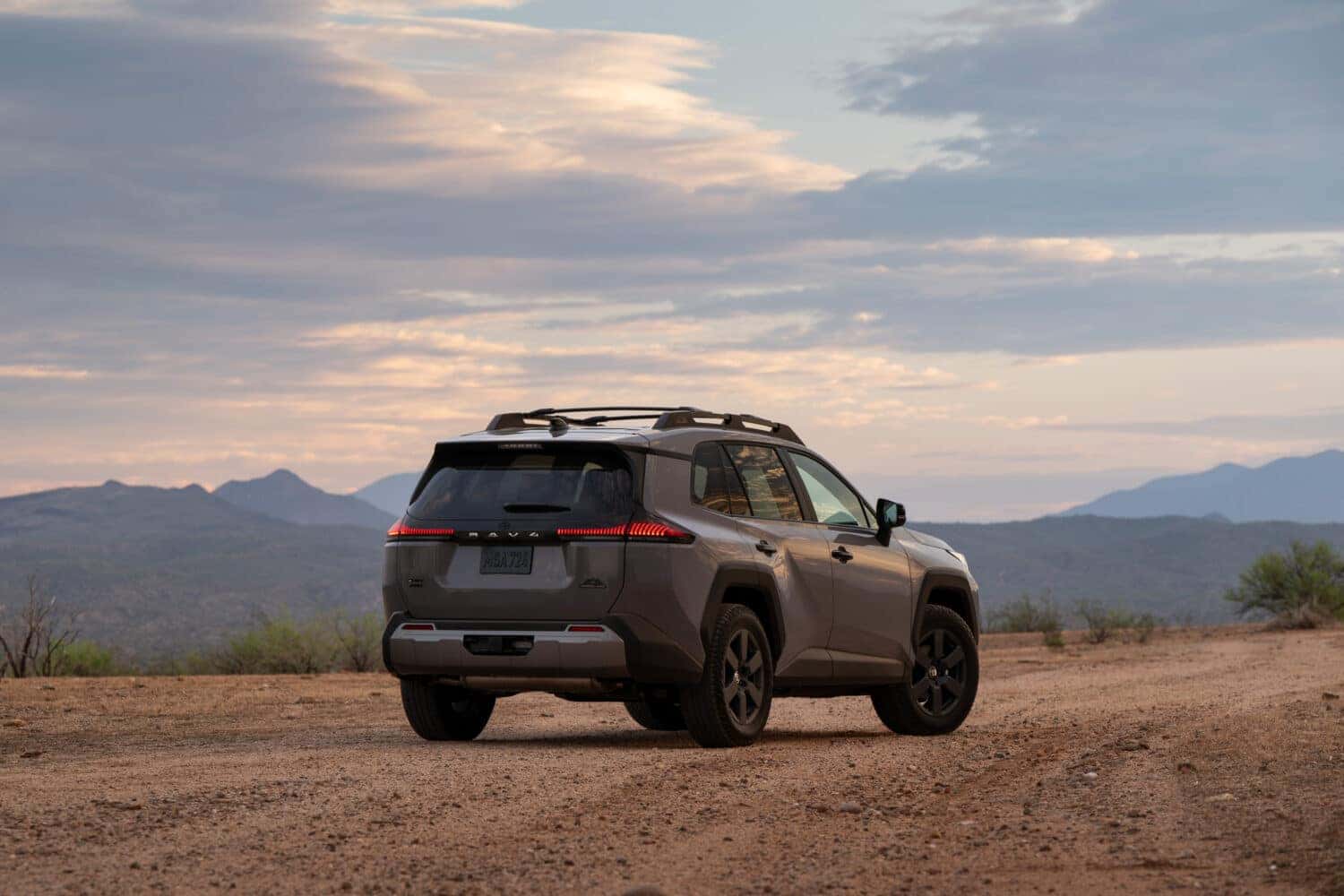
The Toyota had what was considered the most modern infotainment arrangement and was praised as the only model with an available non-black interior (gray). The test vehicle was suspected of having a strut bearing issue. Nevertheless, they enjoyed the vehicle’s on-road handling, the non-intrusive behavior of the continuously variable transmission, and that it had the best acceleration and braking of the three. Off-road, it didn’t quite match the Forester, but they found the electronic AWD (the other two had mechanical systems) effective and liked that the drive modes could be selected while in motion, unlike the Subaru. They had an issue with the Safe Exit Warning, which issued false alerts, and hoped for an over-the-air update to fix it.
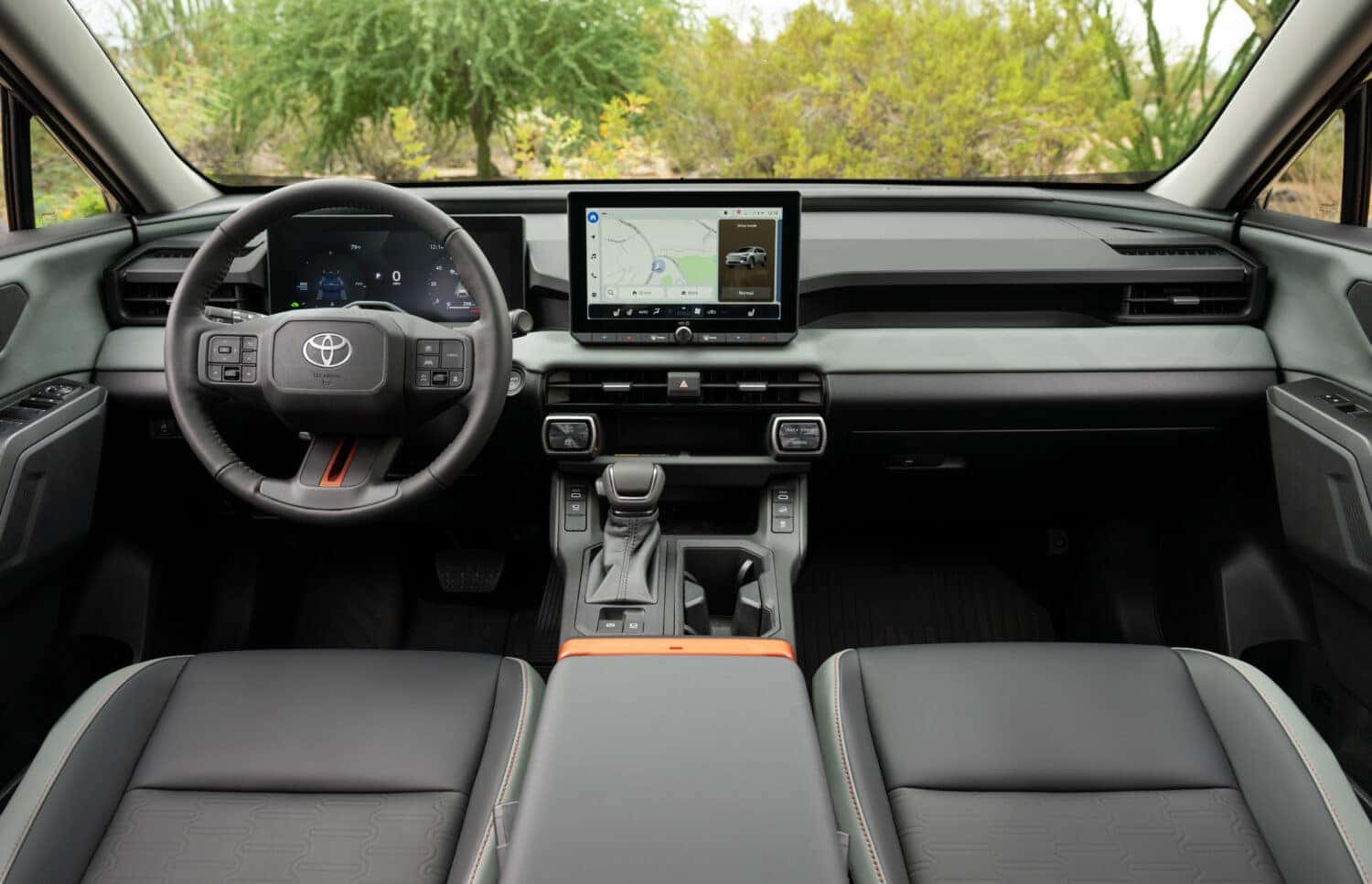
Still, the RAV4 was the fastest, most efficient, and was competent beyond the pavement. “It’s a sensible interpretation of what these soft-roaders should do, cater to the lifestyle side of things: hauling outdoor toys, camping, etc., with a dash of off-road capability thrown on top.”
Sharp Automotive invites you to visit and check out the new RAV4 Woodland to see if it strikes the same right balance for you as it did Motor Trend. Of course, if you want to go all in on off-road activities, the 4Runner and Land Cruiser are in the same inventory.
0 comment(s) so far on Motor Trend Compares the RAV4 Woodland, Subaru Forester Wilderness, and Honda CR-V TrailSport