

Tacoma vs Colorado & Canyon
Midsize trucks have come a long way from their compact truck origins in the 80s. They now sport more powerful engines than full-size trucks did back in the day and have nearly the same capability. In addition, they offer much more variety and off-road capability than their ancestors, and their turbocharged 4-cylinder engines can go easier on the gas card. Sharp Automotive is fortunate to offer three of the best midsize trucks in the industry: the GMC Canyon, Chevrolet Colorado, and Toyota Tacoma. With their redesigns over the past few years, each is better than it has ever been, but which is best for you?
Both the GM and Tacoma models share a 10’11” wheelbase and an overall length of 17’9”. The GM models are taller (6’7” vs 6’1” for conventional models) and wider (7’ vs 6’4”). However, the greater width doesn’t translate to more shoulder room, which is 0.9 inches greater in the Tacoma’s front row and 1.7 inches greater in the second row. The GM models counter with an inch more rear legroom.
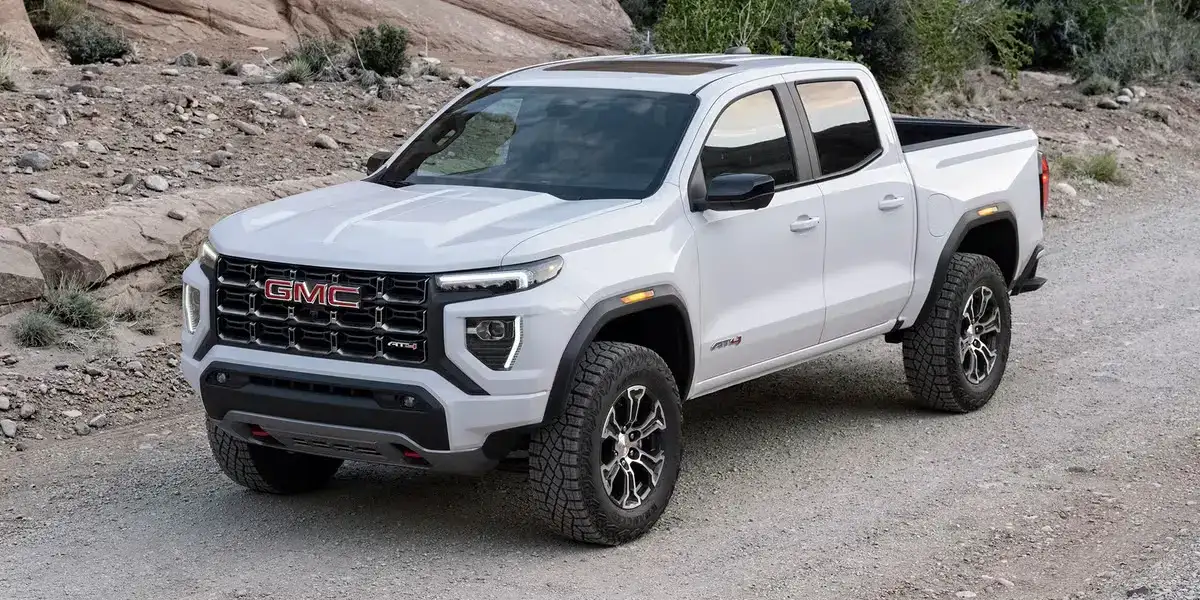
All three model lines are powered exclusively by turbocharged inline-4 engines. If you are looking for a basic truck, Toyota owns the territory with the entry-level Tacoma SR XtraCab 4X2. With its less-than-full 4-door cab and a 6.1-foot cargo bed, it has an entry MSRP of $32,145. That is far less than the entry-level Colorado at $36,895 and the Canyon starting at $38,900. But the GM models both offer full 4-door cabs, a short bed, and 2.7-liter turbocharged engines producing 310 horsepower and 430 lb-ft of torque, compared with 228 horsepower and 243 lb-ft for the base-level Tacoma SR. A Double Cab Tacoma SR with a 5-foot bed, which is basically the same configuration as the GM twins, can be had at an MSRP of $33,805, but it still has the lower-powered engine.
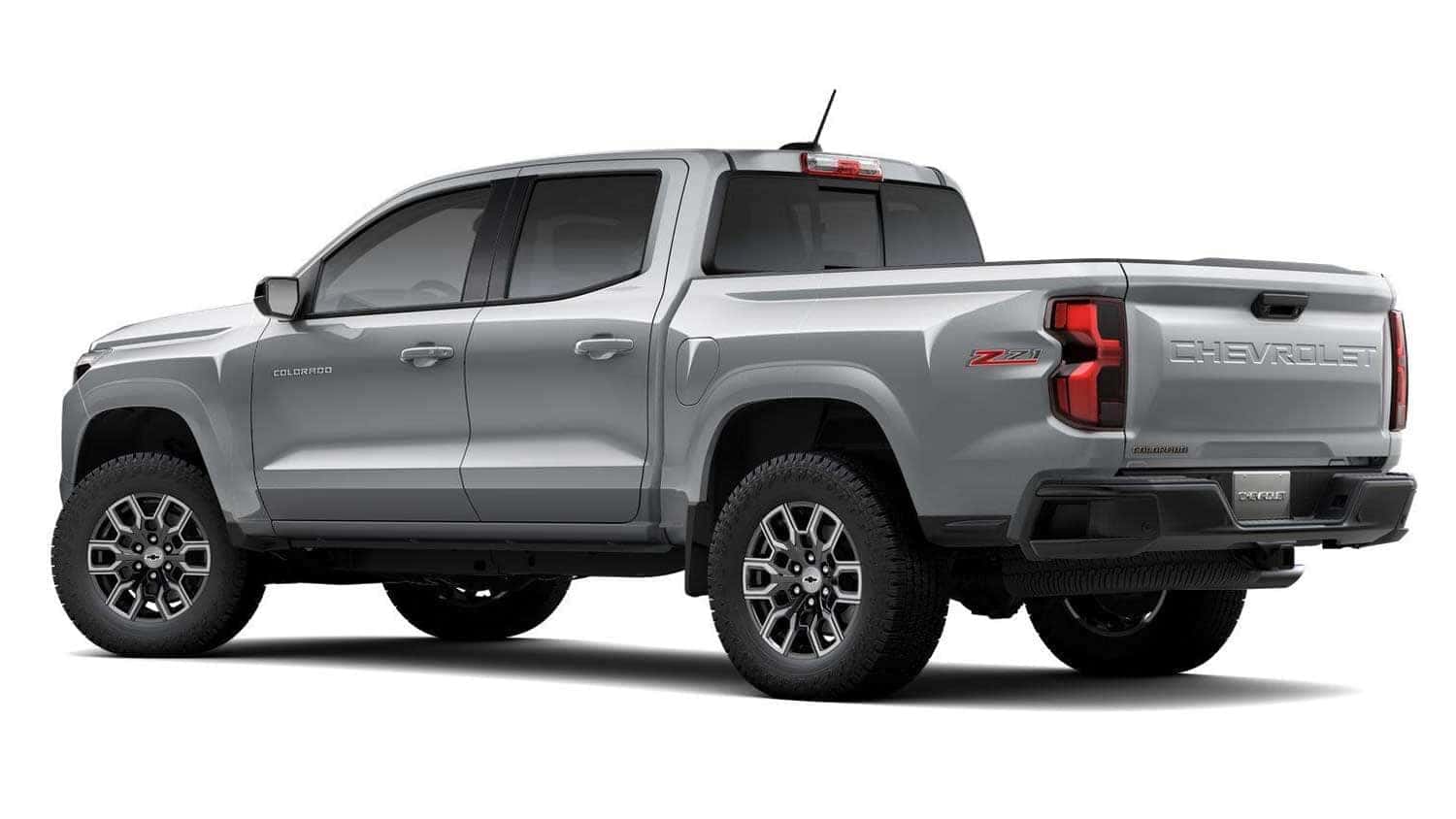
On the other hand, that Toyota engine has an EPA city/highway/combined rating of 20/26/23 with 2WD, which edges out the 2WD Colorado’s 19/24/21 and the Canyon’s 19/23/20.
The Tacoma SR5 Double Cab, short-bed model, matches the GM trucks in configuration and splits the price between their entry-level models at $37,305. Power goes up, but at 278 horsepower and 317 lb-ft of torque, it still falls short of the GM trucks. It beats the GM models by a slight margin in mileage, with the 2WD truck at 20/24/20.
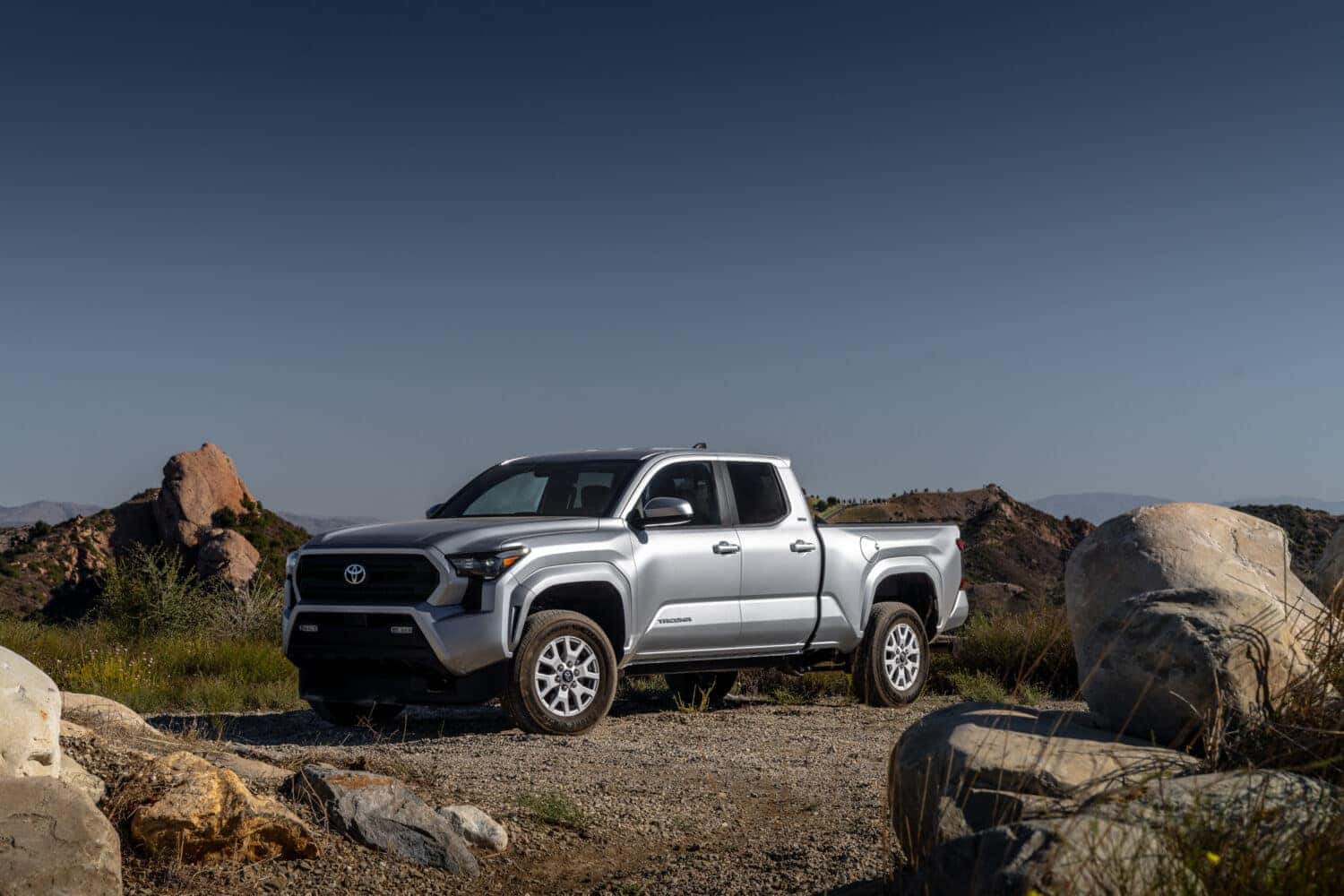
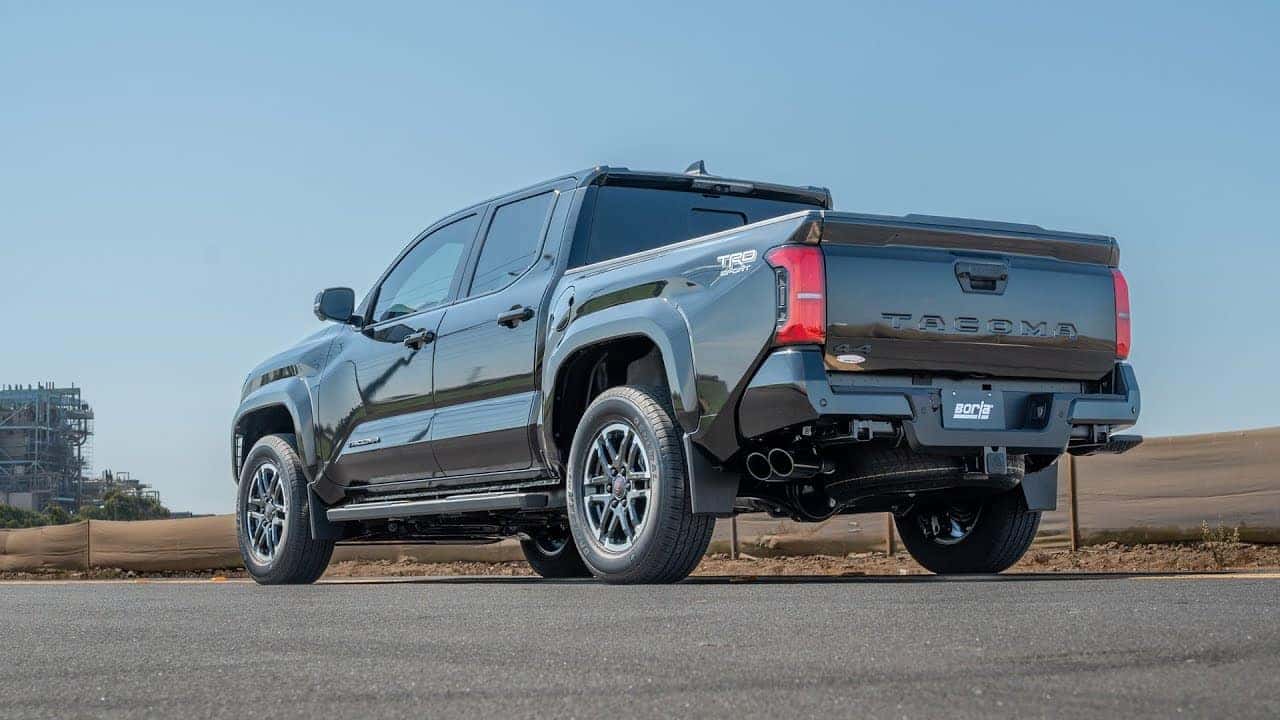
Toyota has a fix for the power deficit with the i-FORCE MAX hybrid drivetrain, which starts on the TRD Sport model and is rated at 326 horsepower and 465 lb-ft of torque, outpowering any Colorado or Canyon. The price for that truck starts at $46,935, which is still well within the price range of the other two truck model lines. It also includes 4WD, standard on all hybrid models. MPG is better, but not by much, at 23/25/23, as the hybrid system is designed primarily to add power.
If you are interested in towing, the GM models have a clear edge, with up to 7,700 pounds of towing capacity on non-off-road-focused models. That capacity drops to 6,000 pounds for the AT4X and ZR2. The Tacoma tops out at 6,500 pounds for an SR5 model. The Hybrid models’ capacity also drops to 6,000 pounds.
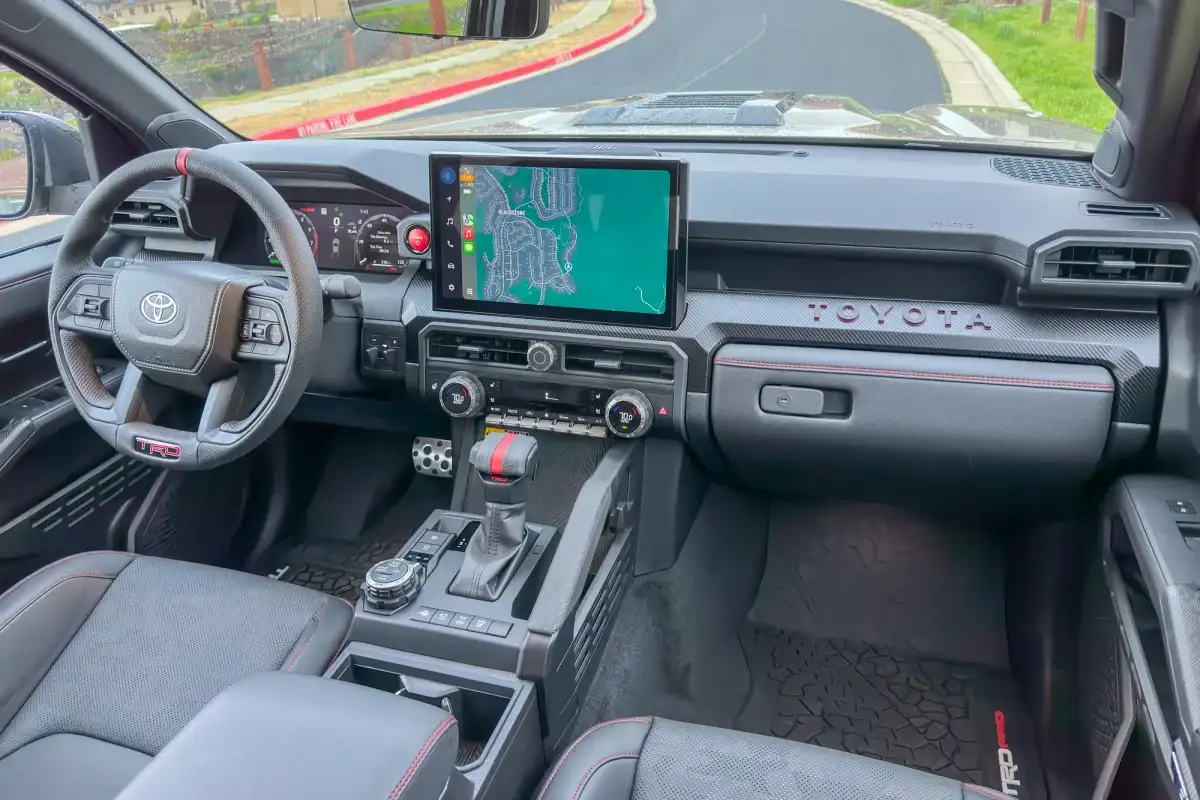
Inside, the Tacoma starts with an 8-inch touchscreen on SR and SR5 models, but a larger 14-inch screen is available on higher models. The GM models split the difference with an 11.3-inch touchscreen on all models, and all these trucks support wireless Apple CarPlay and Android Auto. It is a matter of personal taste, but we opine that the GM models, particularly the Canyon, have a more refined dash than the Tacoma. Its soft dash surfaces, chrome-lined details, and overall more elegant layout tend to make the Tacoma’s hard plastics and rectilinear lines look much more utilitarian in comparison.
Where the Tacoma comes out well ahead is in variety. In addition to offering two cab sizes and two bed sizes, it offers 11 trim levels, from the modest SR to the dune-blasting TRD Pro and the lets-go-overlanding Trailhunter, with sport and luxury models in between. By contrast, the GM models are available only in the Crew Cab and short-bed configuration. The Canyon has just four trim levels, and the Colorado five, though available packages can make the case for a couple more. However, neither the Tacoma nor the Colorado can match the luxury of the Canyon Denali trim.
This is just an overview comparison of the model lines. A direct comparison of the directly competing trims could fill a couple more blog posts. Hopefully, this gave you a general sense of the comparative strengths and weaknesses of the three midsize truck lines offered at Sharp Automotive. The true test is a side-by-side test drive of the GM and Toyota models, which you can do entirely at Sharp Automotive in Watertown, SD.
0 comment(s) so far on Tacoma vs Colorado & Canyon